Subscribe to the Self-Scientist Newsletter
Psychological insights to help you feel, think and live better.

Issue #034: 5 Forces Making Health Hard in 2026 (What Breast Cancer Made me Notice)

It was Memorial Day weekend, May 2026. I was in the shower doing a casual self-breast check when I felt something.
I called my doctor the following morning. She was not available, but I got in to have someone palpate it. She said something to the effect of, “There’s definitely something there. I don’t think it’s anything, but I’ve been wrong before.”
She ordered an “urgent mammogram.”
All the imaging centers around me were booking at least two months out. I kept dialing and found an opening in Renton. Not where I normally go, but I jumped on it.
(More on my fear of scan equipment, and what I did to conquer that fear, in #028: The Avoidance Trap.)
Moving quickly after a suspicious finding matters. The mammogram, biopsy, and MRI that followed confirmed exactly what I did not want to hear:
You have breast cancer.
For two months this summer, I had the full diagnostic workup, the tumors taken out, and reconstructive surgery. I was a woman on a mission, and scheduling medical things became practically a part-time job.
And the very good news is that, as far as the doctors know, I’m now NED: No Evidence of Disease.
There are a few pieces of treatment remaining to lower my risk of recurrence, but I’m beyond grateful to live in Seattle, where I’ve had multiple options for exceptional care.
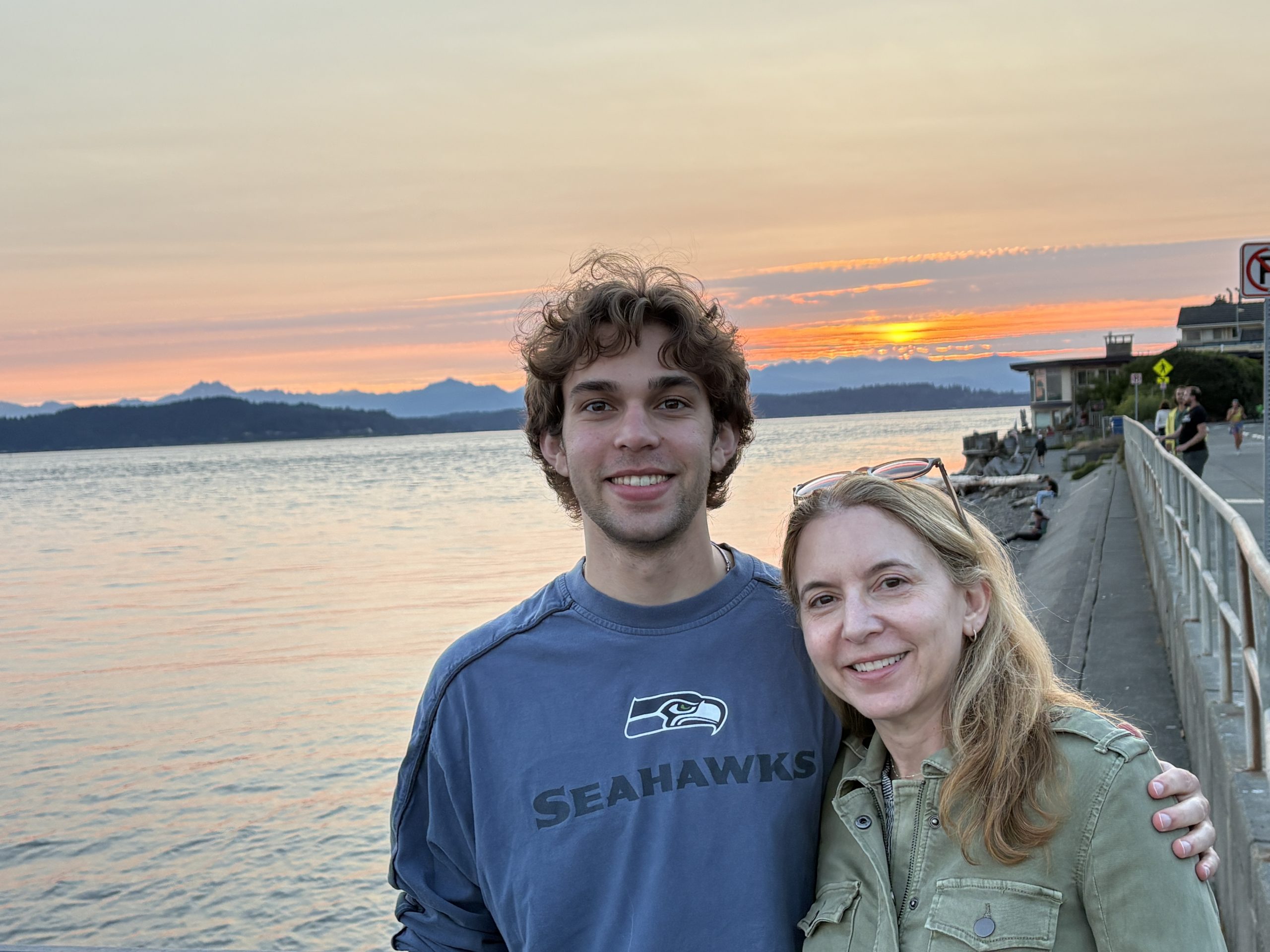
Part of what I want to protect: time with the people I love, in a place I love.
Five Forces Converging to Make Health Hard
I am deeply grateful for the healthcare I’ve received.
I’m surprised, though, by how little information and support I received to guide the health choices I make every day after leaving the hospital.
This experience has left me with five forces that are converging together, spurring me to become more intentional about my quality of life.
1. The Causation Conversation Void
Despite going to a National Cancer Institute–designated cancer center, there have not been substantive discussions about how I got breast cancer, despite asking multiple times.
When I asked providers how it came to be, the answer was some version of: “There’s no way to know.”
My genetic testing was clean. That was very good news. It also didn’t answer the question I keep circling: then how did this happen?
Did I get breast cancer from hormone replacement therapy? Stress? Microplastics? Some combination of things that I will never be able to untangle?
Seriously, I am the person who buys organic-only at Trader Joe’s. I put on sunscreen so religiously that my husband asked whether I could have gotten it from using too much sunscreen. I like a glass of prosecco on the weekend.
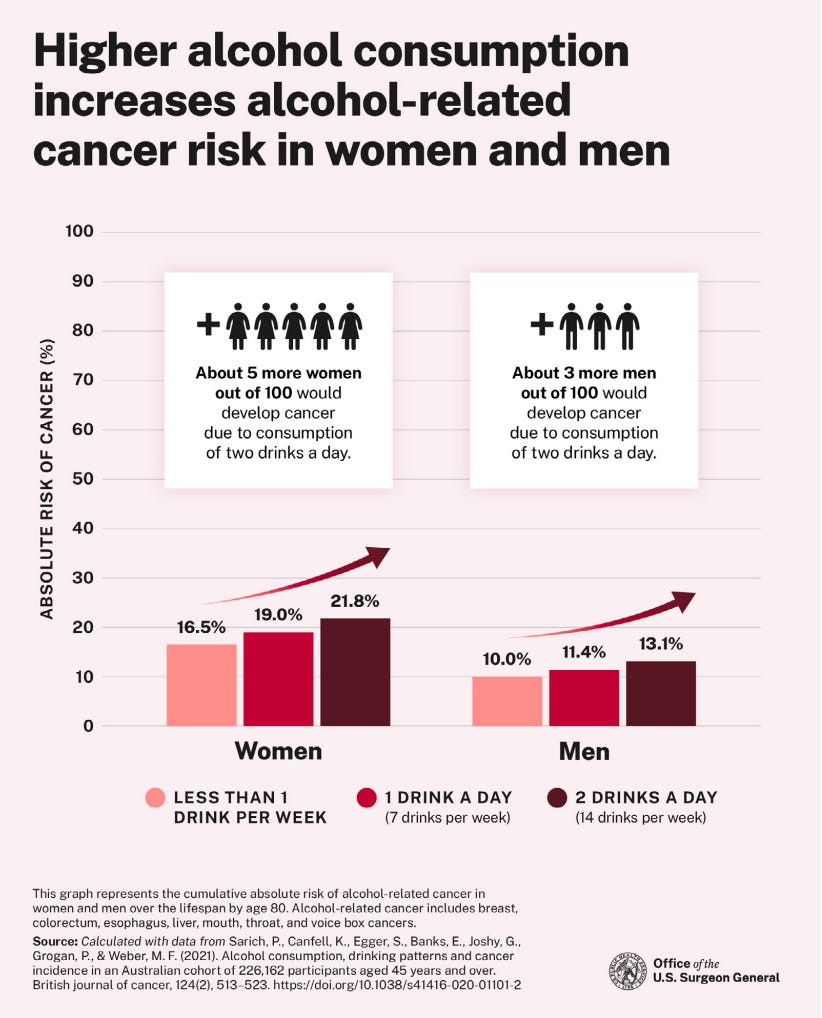
I know no one can give me one neat reason why I got breast cancer. My doctors cannot point to one cause because, for most people, there isn’t a single cause to point to.
But if no one can tell me exactly why I got it, I need to understand what researchers know about risk, and what I can meaningfully influence now.
How do we live with uncertainty without blaming ourselves for every bad health wobble that happens, or micromanaging every minute thing our bodies touch or ingest?
2. The Prevention Education Gap
In the therapy world, we have frameworks like protective factors and ACEs, Adverse Childhood Experiences, that give us clues about functioning later in life.
Is there no equivalent in cancer to help us make some predictions about cause and effect?
The last doctor I asked said to follow the all-around healthiest lifestyle I can.
So what does that mean on an ordinary Tuesday?
To me, it means focusing on prevention. Let’s live the best lives we can to prevent all the yucky things that keep us in hospitals, to the extent we can.
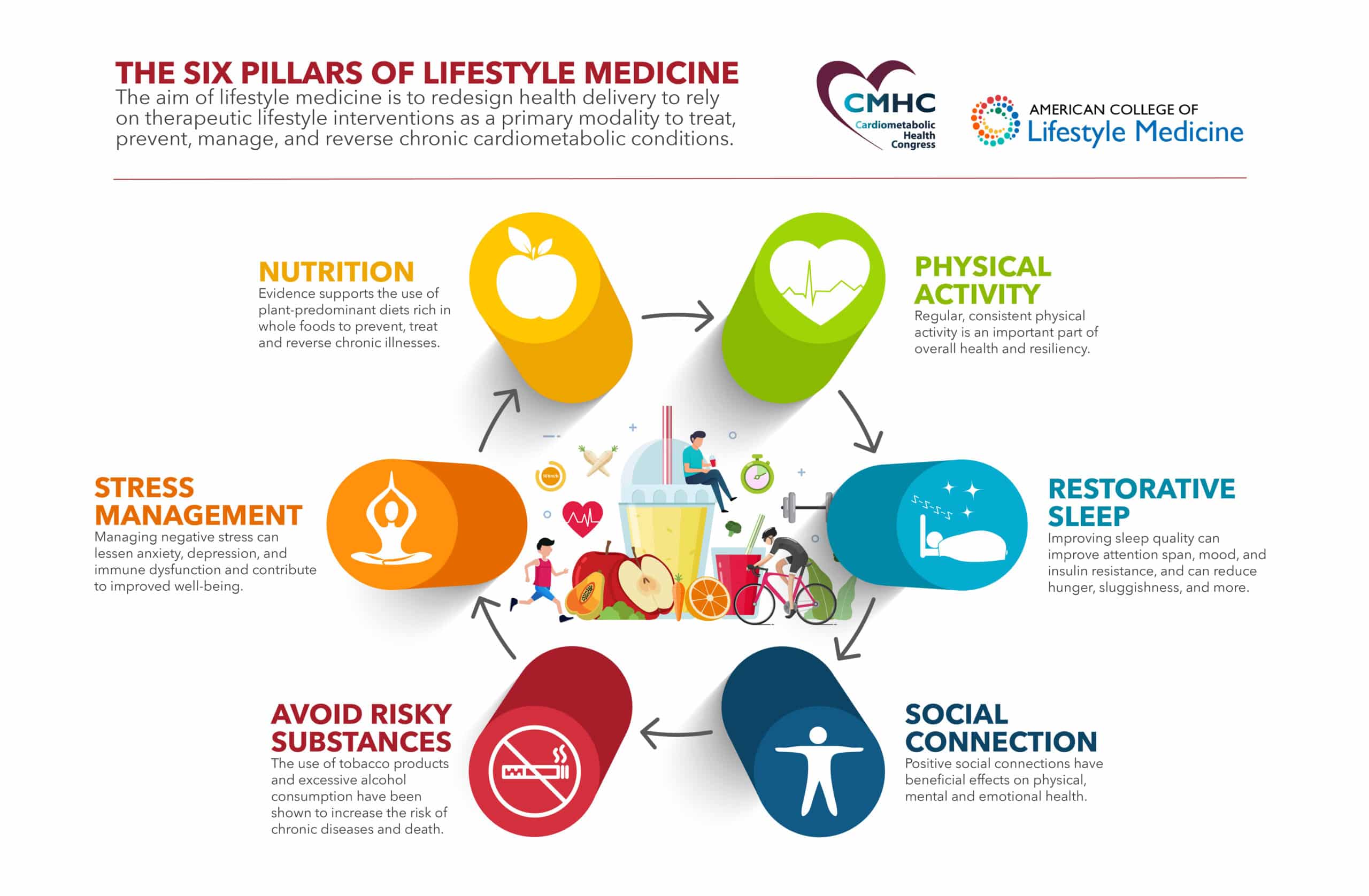
Lifestyle Medicine focuses on 6 pillars of health. Source: American College of Lifestyle Medicine
Surprisingly, practical prevention through the lifestyle choices I make – food, movement, sleep, alcohol, stress, and connection, has not been much part of the medical discussion.
I am not saying these choices can guarantee that cancer will not recur, or explain why any one person gets cancer. I’m saying I expected more help understanding the evidence and putting health-supporting things into practice.
That’s why I’m now doing a Harvard certificate in Lifestyle Medicine. It’s a huge missing piece for most patients.
The focus at the hospital is necessarily on appointments with billing codes, like surgeries, scans and PT. But why is there zero conversation on daily lifestyle habits? Is health insurance unwilling to pay for it?
Is it the same reason there are no commercials for fruits and vegetables? No brand stands to profit if they just tell you to eat more salad.
Incidentally, when my mom was in the hospital for open-heart surgery, lifestyle factors also didn’t come up until I begged the doctors to discuss them.
Is it because doctors have given up hope that people will actually make lifestyle changes rather than pop pills?
If you’re a doctor or health provider reading this, please let me know your thoughts and experience.
3. The Algorithmic Advice Flood
Returning home from my medical appointments, I open my social media feed, and there are at least a dozen “cancer doctors” telling me what I should eat and do.
These healthcare influencers’ tips are often followed by a recommendation for a supplement that has miraculous powers.
Who do you believe? Some of their tips are actually pretty helpful.
Why is the guidance inside the hospital so vague, while my social media feed is full of people who sound completely certain about what I should eat, take, avoid, detox from, or buy?
How do you tell the difference between sound evidence, plausible advice, and fear-based marketing?
4. The Toxic-by-Default Culture
I keep wondering about the world we’re living in: our water, air, food, and the proliferation of plastic in everything.
What evidence does a chemical company actually have to provide in America before a new chemical reaches us? How does that compare with Europe?
We still have the Clean Air Act and the Clean Water Act. But right now, the EPA is pursuing a broad deregulatory agenda that includes reconsidering or rolling back a number of air-, climate-, and water-related rules.
What personal guardrails do we need to have in place when the regulatory agencies around us are weakening exposure standards?
And then there is Roundup. This summer, the Supreme Court ruled that federal pesticide law preempts certain state-law claims alleging that Roundup should have carried a cancer warning when the EPA-approved label did not require one. The Court did not decide whether glyphosate causes cancer.
It decided who gets to control the warning label. That is so frustrating.
In the United States, about 1 in 8 women will develop breast cancer during her lifetime.
And if you have any doubt about the popularity of cancer hospitals right now, just try to find a parking spot there after 8:30 am.
I really do not want to be a Debbie Downer, quite literally, but the stakes are high and the guardrails feel low.
See the newsletter I wrote on #001: Lab Rats in Modern Society.
5. The Profit-Packed Healthcare Squeeze
What also feels like it’s standing in the way of my health success is that I can rarely see my doctor.
She is lovely, and I used to be able to see her. But the health center where she works went through the change that many other health systems went through.
According to an MBA friend in healthcare consulting, the change came in a wave around the time health systems were adopting electronic health records. Small offices could not afford what it took to digitize records, and got bought up by larger health systems.
They then required shorter appointments and more appointments per provider, leaving fewer appointments for people who need to come in urgently.
I’m calling this healthcare-system profit packing.
What role has medical consolidation actually played in fewer available appointments?
Or are we experiencing more cancer, fewer providers and/or insufficient equipment for tests and scans?
What happened to the in-depth doctor visit? What happened to seeing my doctor for an urgent need?
And don’t get me started on health insurance. That is a topic for another day.
Suffice it to say that my health insurance, the insurance I pay a fortune for, denied me a potentially life-saving scan. Thankfully, the cancer hospital appealed, and the denial was overturned.
A New Goal is Crystalizing
All of these forces, including getting cancer, becoming a mom of young adults, and thinking about the years ahead, are crystallizing into a new goal for me.
It is time for me to design my own non-toxic, health-giving midlife makeover.
I mean a research-based, psychologically realistic effort to make my life healthier, stronger, lower-stress, more connected, and more meaningful, while leaving room for joy, work, friendship, exercise, rest, and an occasional feeling that I am fully alive.
Hit reply if you’d like to go down the rabbit hole with me. My experience is that if I’m feeling the need, other people are too. Perhaps we’ll even do a focus group of sorts and experiment together.
I’d love to get your thoughts.
To your health and quality of life!
Debbie
Subscribe to the Newsletter
Get fresh psychological insights from a licensed therapist to help you feel, think and live better—delivered straight to your inbox.
Subscribe to the Newsletter
Get fresh psychological insights from a licensed therapist to help you feel, think and live better—delivered straight to your inbox.